
Tudor
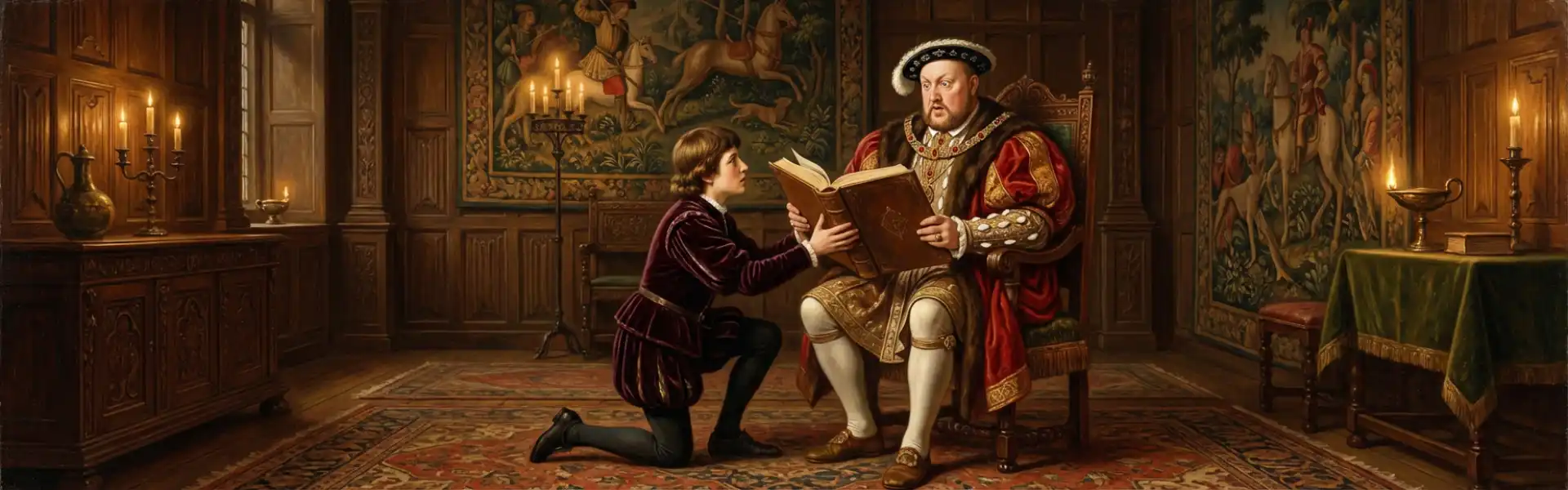
The Tudor dynasty interests us because it stands at one of history’s great crossings: medieval inheritance giving way to early modern ambition, private desire becoming public crisis, and the fate of nations turning on fragile bodies, dangerous marriages, religious conviction, and the will of a few extraordinary figures. Tudor England was not merely a backdrop of crowns, courts, and executions. It was an age of rupture. Henry VIII’s break with Rome reshaped belief and authority. Elizabeth I’s long reign transformed a threatened kingdom into a maritime power. Explorers, courtiers, spies, soldiers, merchants, and recusants moved through a world where loyalty could be rewarded, suspected, or destroyed. That tension is part of the Tudor era’s enduring power: it gives us history at human scale, where policy begins in a chamber, faith becomes a risk, and ambition may carry a man across an ocean or to the scaffold.
For readers of historical fiction, Tudor history offers something unusually rich: a world both familiar and strange. We recognize the hunger for influence, security, love, legacy, and survival. Yet the terms of life were harsher, more intimate, and often more dangerous than our own. A queen’s unmarried body could become a matter of state. A sailor’s voyage could become an act of empire, theft, discovery, or war, depending on who told the story. A family’s religion could determine its safety. My approach is not as costume drama or royal trivia, but as a living field of consequence — a world of belief, violence, navigation, secrecy, and moral complexity. Figures such as Francis Drake belong within that larger Tudor world: not as isolated adventurers, but as men formed by Protestant fear, imperial appetite, seaborne risk, and the expanding ambitions of Elizabethan England.
This Tudor archive gathers essays, research notes, character studies, and related historical fiction material for readers drawn to the age of Henry VIII, Elizabeth I, the English Reformation, Tudor exploration, and the uneasy birth of England’s oceanic power. The fascination endures because the Tudors force us to ask old questions in urgent form: What does power cost? How does faith become politics? When does courage become cruelty? How do private choices alter public history? These pages follow those questions into the world behind the story — where the Tudor era is not a finished legend, but a dangerous and deeply human past, often retold in different shapes.
Historical Fiction Villain Sketch of James Reynard
Historical fiction thrives on complex characters shaped by real events. In this exclusive character sketch from Sic Parvis Magna, explore the troubled past of James Reynard—a fictional villain born amid the brutal upheavals of Tudor England. Inspired by history, Reynard's personal tragedy, betrayal, and violent path offer a gripping portrait of survival, ambition, and revenge in a world torn by religious and political turmoil.
Historical Fiction Novel Sic Parvis Magna Update: 80k words!
I am pleased to announce that the manuscript of the historical novel Sic Parvis Magna, the start-of-series of the Adventures of Francis Drake just crossed 80k words.
Book Review: Historical Fiction Novel Airy Nothing by Clarissa Pattern
In this vivid and moving historical YA novel set in Elizabethan England, a lonely, effeminate boy named John escapes abuse and seeks magic and belonging in Shakespearean London. Along the way, he forms an unexpected friendship with a streetwise pickpocket and discovers his place in the world through theatre. This is a tender, richly detailed coming-of-age story that explores identity, resilience, and the transformative power of art. A highly recommended read for fans of historical fiction and LGBTQ+ narratives.
Francis Drake's Ship the Tiger: History Behind the Fiction
What kind of ship did Francis Drake first sail on? In this behind-the-scenes post about the research that went into writing Sic Parvis Magna, I explore the real historical vessels—like the Gresham Ship, and the Newport Ship—that helped shape my portrayal of Drake's early years at sea on a armed merchantman the Tiger. From piracy to trade this post is a deep dive into the ships that helped to forge a legend.
Young Francis Drake: From Tavistock Farm Boy to Pirate
This is not a full biography of Francis Drake. It is a historical fiction character study of young Francis Drake: the boy from Tavistock, shaped by rebellion, exile, Protestant conviction, maritime ambition, and the example of the Hawkins family.