
Tudor
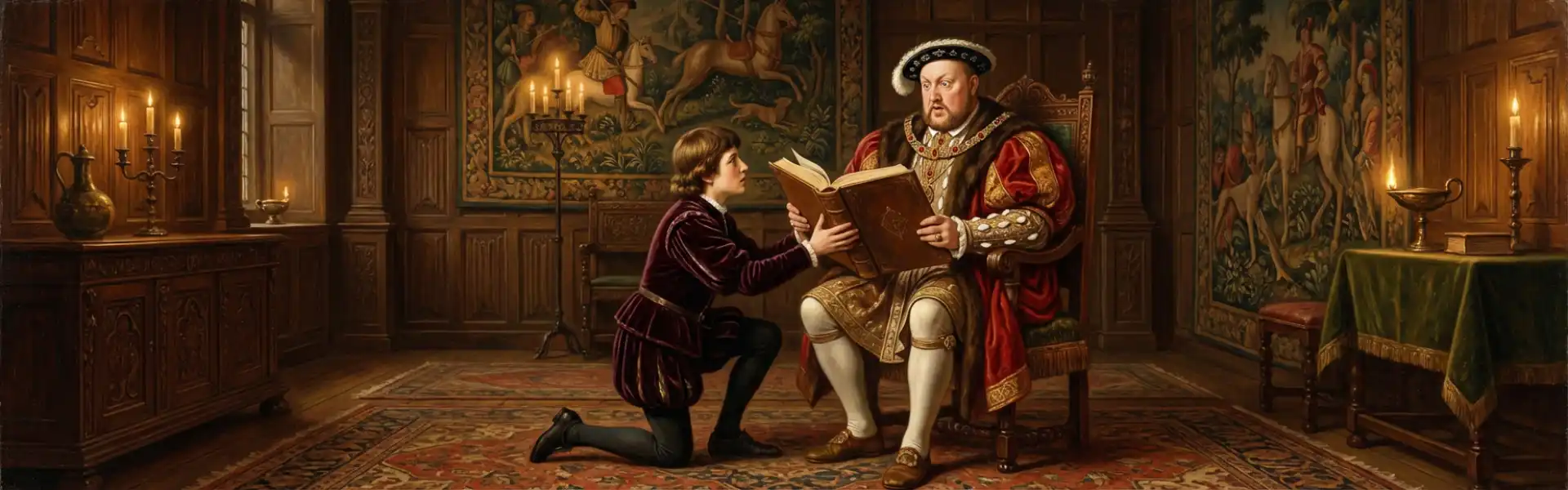
The Tudor dynasty interests us because it stands at one of history’s great crossings: medieval inheritance giving way to early modern ambition, private desire becoming public crisis, and the fate of nations turning on fragile bodies, dangerous marriages, religious conviction, and the will of a few extraordinary figures. Tudor England was not merely a backdrop of crowns, courts, and executions. It was an age of rupture. Henry VIII’s break with Rome reshaped belief and authority. Elizabeth I’s long reign transformed a threatened kingdom into a maritime power. Explorers, courtiers, spies, soldiers, merchants, and recusants moved through a world where loyalty could be rewarded, suspected, or destroyed. That tension is part of the Tudor era’s enduring power: it gives us history at human scale, where policy begins in a chamber, faith becomes a risk, and ambition may carry a man across an ocean or to the scaffold.
For readers of historical fiction, Tudor history offers something unusually rich: a world both familiar and strange. We recognize the hunger for influence, security, love, legacy, and survival. Yet the terms of life were harsher, more intimate, and often more dangerous than our own. A queen’s unmarried body could become a matter of state. A sailor’s voyage could become an act of empire, theft, discovery, or war, depending on who told the story. A family’s religion could determine its safety. My approach is not as costume drama or royal trivia, but as a living field of consequence — a world of belief, violence, navigation, secrecy, and moral complexity. Figures such as Francis Drake belong within that larger Tudor world: not as isolated adventurers, but as men formed by Protestant fear, imperial appetite, seaborne risk, and the expanding ambitions of Elizabethan England.
This Tudor archive gathers essays, research notes, character studies, and related historical fiction material for readers drawn to the age of Henry VIII, Elizabeth I, the English Reformation, Tudor exploration, and the uneasy birth of England’s oceanic power. The fascination endures because the Tudors force us to ask old questions in urgent form: What does power cost? How does faith become politics? When does courage become cruelty? How do private choices alter public history? These pages follow those questions into the world behind the story — where the Tudor era is not a finished legend, but a dangerous and deeply human past, often retold in different shapes.
Box Hauling in Naval Historical Fiction: A Dangerous Sailing Maneuver
A behind-the-scenes research note on the sailing maneuver known as box hauling, and how it shaped a scene in the historical fiction novel Sic Parvis Magna. Inspired by the exciting club hauling scene from Pirates of the Caribbean, I attempt to work out if a sixteenth-century galleon could plausibly execute the maneuver.
An Advance Reader Opportunity Is Coming for Sic Parvis Magna
An advance reader campaign is coming for Sic Parvis Magna, my historical fiction novel about the young Francis Drake. Up to 100 selected readers will receive a digital advance copy before publication.
Sic Parvis Magna Draft 3 Update
A quick update of Draft 3 of Sic Parvis Magna—the origin story of the future Sir Francis Drake, and Book 1 in my Adventures of Francis Drake historical fiction series. Read below for more information about the book and for the link for more information.
My October 2025 Newsletter is available
I am pleased to restart the publication of my historical fiction newsletters.
Henry Howard, Earl of Surrey: The Last Knight of a Dead Age
My upcoming historical fiction short story, A Fool's Errand, is set in the summer of 1544. As the English cannons thundered against the walls of Montreuil-sur-Mer, the drama and death of the external conflict masked the head-on collision of two visions of duty and honor---between the romantic chivalry and the harsh realities of a Tudor war. The principal tragic antagonist of the story is the brilliant and volatile Henry Howard, Earl of Surrey, whose virtues, twisted by pride and circumstance, nearly destroyed him and catalyzed another man's awakening.
Sic Parvis Magna Update and Tudor War Story News (Sept 2025)
The September 2025 edition of the Historical Fiction Newsletter shares updates on my Tudor-era projects, including progress on the Adventures of Francis Drake novel Sic Parvis Magna and the launch of a new short story, A Fool's Errand, set during the Siege of Montreuil. You'll also find a historical fiction book recommendation about the epic Siege of Malta.
A Tudor Character Sketch: Gregory Trelawney
Gregory Trelawney, a fictional younger son of a Tudor gentry family, takes center stage in an historical fiction short story set during the 1544 Siege of Montreuil. The story explores themes of honor, mortality, and loyalty in the brutal reality of Henry VIII's last campaign. Alongside historical figures like the Duke of Norfolk and the Earl of Surrey, Trelawney confronts both the folly of command and the cost of survival. His journey becomes not just a tale of battle, but of how war strips away illusion and forces a reckoning with purpose.
Memento Mori in Tudor England: Death, Faith, and Drake
Death haunted Tudor England. Explore how memento mori, Francis Drake's dangerous voyages, and religious fear shape the conflict in my historical fiction novel Sic Parvis Magna.
The Last Song - Historical Flash Fiction
In the opulent and treacherous court of Henry VIII, a low-born musician Mark Smeaton strums a defiant, treasonous melody...
1555 Philip and Mary Shillings
Few artifacts capture the complex political and religious landscape of 16th-century England as vividly as the Philip and Mary shilling. Issued during the reign of Mary I of England and her husband, Philip II of Spain, these coins are a reminder of religious upheaval and intense power struggles that marked Francis Drake's passage into adulthood.
Villain Sketch: Pirate Captain Guy Alfonse Guichenot
Discover the historical fiction villain Captain Guichenot from Sic Parvis Magna. This behind-the-scenes character sketch reveals how the ruthless 16th-century privateer was originally crafted to challenge Francis Drake, embodying the brutal world of early modern piracy. Explore the creative process, historical details, and psychology that shaped this dark figure from the novel.
Sic Parvis Magna Meaning: Francis Drake's Motto Explained
In this post, I look at how the phrase became linked to Drake, what it suggests about his rise, and why it became the title of my Tudor-era historical fiction novel.