Sic Parvis Magna Meaning: Francis Drake's Motto Explained
Sic Parvis Magna means greatness from small beginnings. The phrase became associated with Sir Francis Drake almost 500 years ago, and inspired my historical fiction novel of the same name.
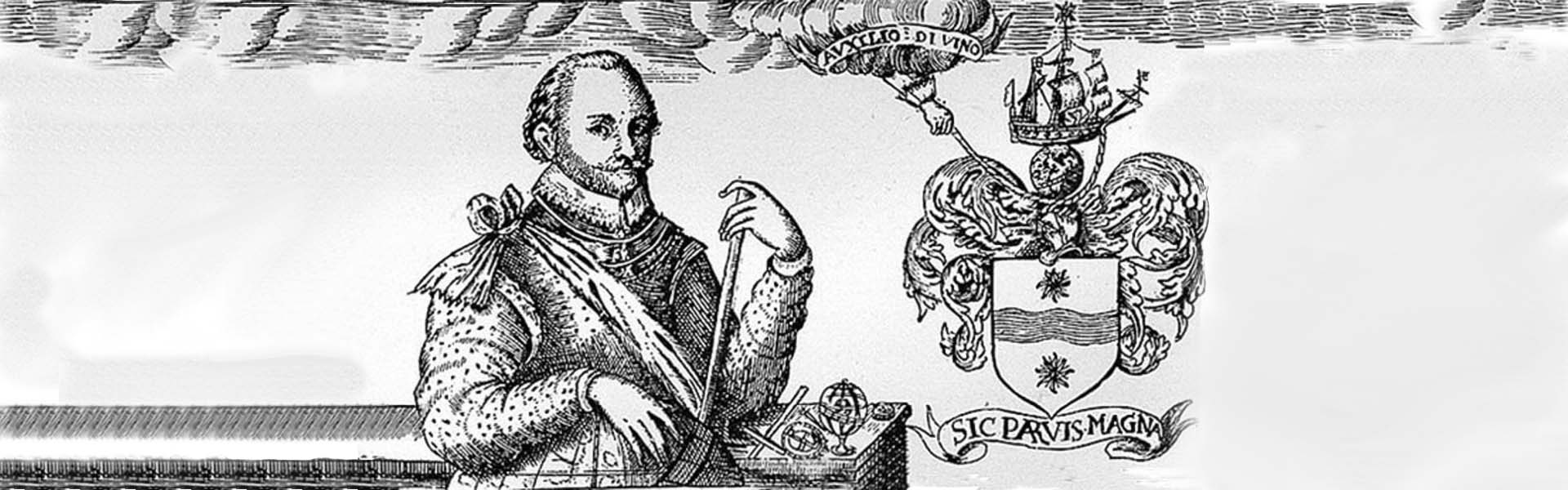

What makes Sic Parvis Magna compelling is how completely it fits Francis Drake. It appears beneath his coat of arms after a life that seems to rise out of obscurity into fame, danger, controversy, and legend. For anyone trying to understand Drake—or imagine the years before the historical record becomes clear—the motto feels less like heraldic decoration and more like a key to him.
Why the Phrase Endures
Part of the phrase’s staying power is that it resists a single perfect translation. You will see Sic Parvis Magna translated in closely related ways, including “from small things, greatness” and “greatness from small beginnings.” That flexibility is part of its appeal. It is concise, memorable, and broad enough to carry both ambition and transformation.
For Drake, the phrase matches the trajectory of his life. However one judges him—hero or villain, privateer or pirate—his rise was extraordinary. He emerged from uncertain beginnings in Tudor England and became one of the most famous seafarers of the sixteenth century.
Drake’s Humble Beginnings
The “small beginnings” side of the motto is reflects how much of Drake’s early life remains obscure.
We do not have a surviving parish birth record for him, and even his birth year is usually given as an estimate. The family is associated with Crowndale Farm near Tavistock, but relatively little detail survives from the common world into which he was born. That uncertainty is part of what makes Drake such a interesting historical figure: his later fame is vivid, but its origins are obscure.
The record sharpens only later, as Drake emerges into the violent maritime world of the mid-sixteenth century. His career was shaped not only by the growing conflict between England and Spain, but also by the brutal Atlantic ventures of the age, including slave-trading expeditions in which he took part before his later attacks against Spain hardened into legend.
Spanish sources begin to notice him around the time of the Panama raids in 1572 or so. From there, the story escalates quickly. He becomes feared enough that Philip II places a price on his head, and Spanish enemies give him the name El Draque—the Dragon.
That meteoric rise from obscurity to notoriety is what gives the motto its transformational force. Drake does not simply achieve prominence; he becomes a figure large enough to inspire national pride in England and enduring fear in Spain.
Even his death becomes part of the legend. In 1596, off the coast of Portobello, a lead coffin bearing Sir Francis Drake in full armor was lowered into the sea. Not only has that coffin never been recovered, but the snare drum that was aboard the Golden Hind during its circumnavigation was taken to his home, Buckland Abbey. The legend is that whenever England was in danger, that drum would summon him back to defend her.
It is a fitting end for a man who so often seems to stand between documented history and myth.
The Politics of Drake’s Knighthood and Coat of Arms
The phrase became inseparable from Drake because it appears on the coat of arms granted after his circumnavigation.
That moment was politically delicate. Drake returned to England rich, famous, and useful—but also dangerous from a diplomatic perspective. Openly honoring him meant implicitly honoring a voyage that Spain regarded as piracy. Elizabeth I wanted the glory without the full diplomatic cost, which made every gesture around Drake carefully calculated.
Even the knighting itself reflected that tension. Tradition holds that Elizabeth turned part of the ceremony into political theater by involving the French ambassador, muddying the message to Spain and making the act less straightforward than simple royal endorsement.
The coat of arms that followed was equally revealing. There is evidence that another branch of the Drake family objected to his use of their dragon arms, and Elizabeth resolved the dispute in characteristic fashion by granting him a new design. It showed a ship circumnavigating the globe, drawn by a rope held in the hand of God. Above it appeared Auxilio Divino—“with God’s help.” Beneath it appeared Sic Parvis Magna.
Taken together, the imagery and motto tell a story about how Drake was meant to be seen: not merely as a successful raider, but as a man whose rise during his time could be framed as providential, national, and extraordinary.
Why I Chose the Title
When I began writing about Drake’s early life, I was drawn less to the famous admiral than to the unknown young man who came before him. The historical record leaves gaps, and those gaps raise the most interesting questions. What kind of experiences shape a person into becoming Francis Drake? What sort of ambition, grievance, daring, or hunger drives that ascent?
That is why this phrase became the title of my first novel. It does not just describe Drake’s rise. It also captures the tension that makes his story worth telling: greatness that is inseparable from risk, violence, political maneuvering, and reinvention.
There is also a smaller personal irony in the title. Sic Parvis Magna, the story itself, was never originally meant to become a full novel. It began as a smaller project and kept growing until it became a book in its own right. In that sense, the title ended up fitting the writing process as well: something intended to be modest took on a much larger life.
Final Thoughts
For Drake, Sic Parvis Magna is more than a heraldic motto. It is a compact statement of his life: from uncertain beginnings into fame, power, danger, and legend. That is why it remains such a compelling phrase historically, and why it felt like the right title for a novel about the making of Francis Drake.
Further Reading
Bett, J., & Channon, M. (2018, 09 16). Sir Francis Drake’s birthplace is now a crumbling ruin. Retrieved from PlymouthLive: https://www.plymouthherald.co.uk/news/plymouth-news/sir-francis-drake-birthplace-ruins-2045898
Kelsey, H. (1998). Sir Francis Drake. New Haven: Yale University Press.
Sugden, J. (1990). Sir Francis Drake. New York: Henry Holt and Company.
Turner, M. (n.d.). In Drake’s Wake. Retrieved from In Drake’s Wake: http://www.indrakeswake.co.uk
Related Reading

Continue into the story behind the motto
If the meaning of Sic Parvis Magna drew you into Francis Drake's world, continue into the opening scenes of the novel.