Best Historical Fiction Books: Anna Karenina by Leo Tolstoy
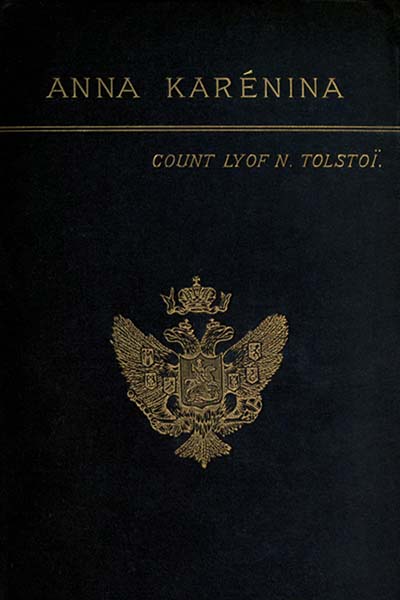
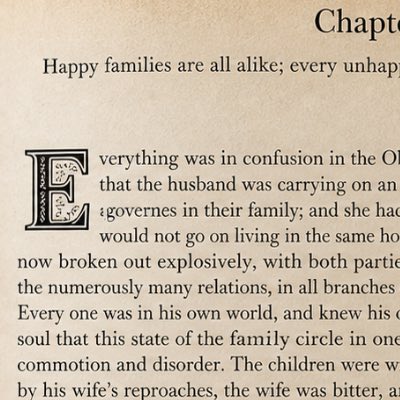
All happy families are alike; each unhappy family is unhappy in its own way.
Few opening lines in world literature work harder than Tolstoy’s. We quote it so often that we have almost stopped hearing it. And yet, the sentence is not really an aphorism. It is an invitation, and a small trap. The novel that follows does not actually believe happy families are interchangeable. The Levins end the book in something like happiness, and their happiness is as particular as anything in Anna’s unraveling. Tolstoy’s first move is to offer a symmetry his novel then spends eight hundred pages complicating. Anna Karenina begins by teaching its reader to distrust the kind of sentence it begins with.
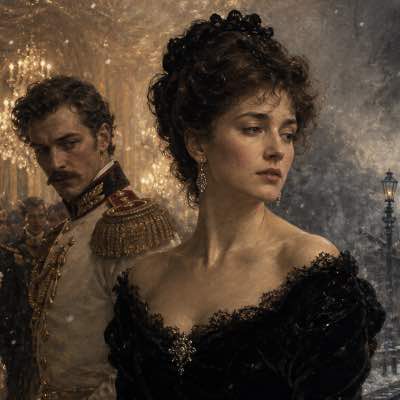
First published in installments between 1875 and 1877, and collected into a single volume in 1878, the novel is summarized in its central scandal. Anna, trapped in a cold marriage to the bureaucrat Alexei Karenin, falls in love with Count Vronsky, and is gradually driven toward isolation, jealousy, and despair.
That summary is accurate, but it misses what gives the book its real greatness. Tolstoy makes the scandal carry far more weight than gossip, punishment, or moral lesson. He refuses to reduce Anna to either a fallen woman or a romantic martyr. He gives her grace, intelligence, vanity, tenderness, impatience, longing, and blindness—in equal measure. The result is one of the most multidimensional characters in literature.
The Cost of Being Seen
Few novels do more than Anna Karenina to justify their place among the best historical fiction books, and part of the reason is that imperial Russia is never mere backdrop. Tolstoy does not drape a love story in period detail and call it history. He shows how a society enters daily life and then controls it. Rank, money, family expectations, church, manners, and the social theater of respectability are not merely scenery around these characters. They shape perception itself. Once Anna crosses the line society draws around marriage, she is censured from the outside, pushed inward—into secrecy, suspicion, fear, and the terrible sense that every glance in a theater box is a verdict. In Tolstoy’s world, public shame does not stay public for long.
The novel’s epigraph—Vengeance is mine; I will repay—has been argued over for a hundred and fifty years. It is a warning against the human urge to condemn, and a reminder that judgment belongs elsewhere.
Is it also Tolstoy’s quiet step back from his own judgement.
The “respectable world” of the novel does not wait for vengeance. It supplies its own, and Anna becomes the target of society’s “virtue.” Her fall gives the drawing rooms of Moscow and Petersburg a chance to feel upright.
Feminist readings of the book have sharpened something already present in it: Anna is judged by a code that falls far more heavily on her than on the man with whom she sins. A world in which transgression is common still requires a visible sacrifice. Anna is made to bear more than her share of the moral burden.
That insight gives the novel part of its continuing force. Rather than excusing or explaining Anna, Tolstoy is asking us to see the dishonesty of a world in which standards are stern, theatrical, and unevenly applied.
Tolstoy’s Inner Realism
If Anna Karenina were only a social novel, it would still be extraordinary. What lifts it higher is the depth of its psychological attention. Tolstoy takes the reader so far into his characters’ inner lives that the book feels startlingly intimate even now. Anna’s jealousy, pride, tenderness, and growing instability are rendered from within.
Karenin’s coldness is not merely coldness; it is formalism as a habit, vanity, injury, and a refuge. Tolstoy notices it in details as small as the cracking of his knuckles. Vronsky’s confidence thins under pressure. Levin’s spiritual restlessness is not an abstract problem but something he lives through in his work, courtship, failure, embarrassment, and the hunger for a life that coheres.
Tolstoy’s narrative method is essential here. His realism does not depend only on accurate imagery, though he gives that in abundance—Anna’s small hands, the curls at her nape, the English novel she opens on the night train, the guttering reading lamp in her final chapter. His perspective is fluid and moves between outward action and inward consciousness, allowing the same social scene to be seen through several minds without losing the where you are. A ball means one thing to Kitty, another to Anna, another to Vronsky, and the ball remains the same ball. That dual vision—panoramic and intimate at once—is one of novel’s greatest gifts.
It is also why the book still feels modern. Long before the full flowering of literary modernism, Tolstoy had learned how to let consciousness itself carry the drama. Anna’s world narrows. Love tends toward fear. Suspicion into Fear. Pride battles shame. She begins by resisting society’s verdict and ends by hearing it everywhere. By her last chapter, on the carriage ride to Obiralovka, her mind had become a small, hostile room from which there was no exit but one. Tolstoy is devastating on this progression inward. Her psychology is not detachable from the world that has closed in around her.
Imperial Russia Through Domestic Life
The historical reach of Anna Karenina extends well beyond Anna herself. The Levin chapters are a parallel plot and a philosophical counterweight. They widen the view. Through Levin, Tolstoy moves from salons and railway carriages into the fields: agricultural labor, reform uncertainty, the strained relations between landowners and peasants in a Russia still living through the consequences of the 1861 emancipation of the serfs. Levin’s search for meaningful work and an honest living is inseparable from that historical moment. He is trying to discover how a decent life might be built without the security of old social structures.
There is also a great deal of Tolstoy in Levin—the surname is only a step from his own—and the book carries traces that readers who know Yasnaya Polyana will recognize. The scene in which Levin proposes to Kitty by chalking only the first letters of each word on a card table, and watching her understand, is almost exactly how Tolstoy proposed to Sofia Behrs in 1862. Those traces tell us where the novel’s center of gravity lies for its author. Anna is Tolstoy’s greatest tragic creation. Levin is his vessel for Tolstoy’s questions he could not stop asking. The answer, A Confession, Tolstoy would publish only a few years later.
This is where the novel becomes especially rewarding for readers of historical fiction. Tolstoy makes the past legible through habit of characters, texture of settings.
Imperial Russia is revealed in railway stations, balls, nurseries, elections, estates, dining rooms, servants’ quarters, and the invisible laws of class and conduct. If in War and Peace Tolstoy reveals history through thousands of lives and a state crisis, Anna Karenina reveals a culture through domestic life.
Tolstoy’s world is lived in.
That is among the clearest marks of historical fiction at the highest level.
Passion, Work, and Stubborn Hope
The novel refuses a single answer to the problem of how to live. Anna and Levin are not opposites, they are different. Anna’s story is governed by desire, public shame of “wrong,” emotional dependence, and the terrible personal cost being seen wrong exacts.
Levin’s is governed by work, awkward courtship, self-doubt, pliability, and the slow search for meaning.
Anna’s tragedy is intense, public, and unforgettable. Consider the steeplechase in Part 2, where Vronsky, riding too hard, injures his horse Frou-Frou and himself. Anna, watching from the stands, gives herself away to Karenin with a single cry. It is one of Tolstoy’s most brutal scenes and one of his most economical: in a few pages he has shown Vronsky’s reckless appetite, Anna’s loss of composure (and ultimately, like the horse, her life), Karenin’s slow perception, and the way a single public moment can make a private life legible to the whole society.
Levin’s struggles are quieter. Through him, Tolstoy asks whether ordinary life can be significant. Can marriage become more than disappointment? Can labor become more than routine? Can belief survive modern self-consciousness? Levin does not answer these questions cleanly. That is part of why he matters—he becomes the novel’s ethical center.
Why Anna Karenina Still Matters
Few novels better earn their place among the best historical fiction books. Anna Karenina is not simply a great historical fiction novel, nor only a tragic love story. It is about what a culture honors, what it excuses, what it cannot bear to see, and what it destroys. Tolstoy’s imperial Russia is gone, as is the country that followed it (USSR). The forces that move through his Anna Karenina—love, vanity, longing, hypocrisy, loneliness, duty, and the fear of public shame—remain uncomfortably near. That is why the book still feels urgent. It renders a vanished world with authority, and it keeps that world morally alive.
For English readers, a note on translations: Constance Garnett’s 1901 rendering remains the most widely reprinted, but readers who want the grain of Tolstoy’s Russian often prefer the Maude edition, or the more recent versions by Pevear and Volokhonsky (2000), Rosamund Bartlett (2014), or Marian Schwartz (2014). The book is long, but the longueurs are the point. Tolstoy needed every page to show how imperial Russia lived inside the minds of the people.
Frequently Asked Questions About Anna Karenina
What is the main plot of Anna Karenina?
The historical fiction novel follows the lives of two primary characters, Anna Karenina and Konstantin Levin.
Anna is married to a cold aristocrat, Alexei Alexandrovich Karenin. She meets count Vronsky, who is flashing, dynamic, and superficial, and their relationship turns becomes an affair. Inevitably, Karenin and others learn of the relationship, and while Vronsky distances himself, Anna becomes increasingly unhappy. Her deteriorating mental state leads her to her tragic end.
Anna and her sphere represent the high sheen of a veneer of Russian aristocratic society—communal propriety, elegance, wealth, and power.
Konstantin Levin, who is a landowner, battles for understanding faith, love, and the meaning of life. He courts and marries, spends time on estate management, and otherwise goes through an uneventful life.
Levin is Tolstoy’s plodding-along “real” standard bearer for hope.
What is the Anna Karenina’s Central Theme?
While this is a simplification (as Tolstoy’s novel presents multiple nuanced themes), one major theme could be stated as passion versus purpose. This needs to be qualified, but it fits as a “single” theme. Depending on the read, it could be love versus duty, civil society versus hipocracy, individual versus community, and several others. None of these would be wrong.
When was Anna Karenina written and published?
Tolstoy wrote Anna Karenina between 1873 and 1877, beginning the novel after reading a fragment of unfinished prose by Pushkin that suggested a beginning to him. The book was first serialized in the literary journal The Russian Messenger from 1875 to 1877, though Tolstoy and the editor Katkov quarreled over the last section and broke off the serialization. The complete novel was published as a single volume in 1878.
Is Anna Karenina a true story?
The plot is invented, but the final act draws on an actual event. In January 1872, a woman named Anna Stepanovna Pirogova threw herself under a train near Tolstoy’s estate after being abandoned by her lover. Tolstoy was aware of the event, and was impacted by it. The broader world of the novel—its marriages, estates, and anxieties—is the world Tolstoy knew firsthand as a Russian noble of the 1870s.
Why does Anna kill herself?
There is no single cause, and that is Tolstoy’s point. She is exhausted by isolation, by jealousy, by the social world that has closed around her, and by her inability to forgive Vronsky or herself. By her final chapter, her mind had become a small, hostile room. The death is a last reassertion of will in a life where every other choice has been taken from her.
What is the moral of Anna Karenina?
Tolstoy resisted moralizing, and the novel’s epigraph—Vengeance is mine; I will repay—could be interpreted as a warning against supplying one. If the book has a central moral claim, it is that the judgment societies pass on individuals is usually dishonest and often cruel, and that a life of quiet, honest labor, like Levin’s, is closer to meaning than a life of display. But the novel refuses to offer either statement definintevely.
Is Levin based on Tolstoy himself?
Yes. The name Levin is only a syllable away from Lev, the Russian form of Leo, and the character shares Tolstoy’s estate management, his rural convictions, his crises of faith, and aspects of his marriage. The scene in which Levin proposes to Kitty by chalking the first letters of each word on a card table reproduces Tolstoy’s own proposal to Sofia Behrs in 1862. Levin’s spiritual struggle in Part 8 anticipates Tolstoy’s religious crisis in A Confession.
How long is Anna Karenina, and is it worth reading?
Depending on the translation, Anna Karenina runs to roughly eight hundred pages—, but Tolstoy’s prose reads far more fluid than its length suggests. The book rewards unhurried reading, and its longueurs turn out to be essential: Tolstoy needed every page to show how imperial Russia lived inside the minds of the people.
Should I read War and Peace or Anna Karenina first?
Either works as an entry into Tolstoy, but Anna Karenina is the more accessible first book for most modern readers. War and Peace is longer, more panoramic, and more historical in the conventional sense, with battlefields and philosophical essays on history. Anna Karenina is tighter, more intimate, and more psychologically immediate. Tolstoy himself considered it his first true novel, and readers new to Russian literature often find it the warmer door.

About the Author
Get Best Historical Fiction Books: Anna Karenina by Leo Tolstoy at
Read Next
Did You Like This?