St. Elmo's Fire by Oliver Theakston: Historical Fiction Review

St. Elmo’s Fire and Magellan’s Voyage
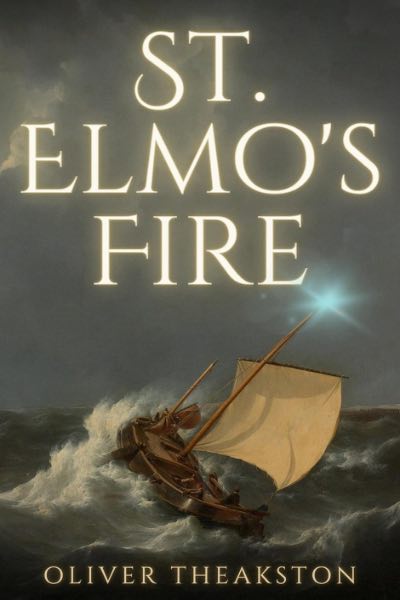
Author Oliver Theakston’s historical fiction novel St. Elmo’s Fire takes us aboard the Armada de Molucca, the five-ship fleet commanded by Ferdinand Magellan that set sail from Seville in 1519 in search of a westward route to the spice-rich islands of what is now Indonesia. The novel is at once a story of the voyage itself, of the glory and power Magellan — a low-ranking Portuguese nobleman serving the Spanish crown — sought to claim for himself, and of the real cost of the expedition, measured in human lives on both sides: the crew who endured starvation, disease, violence, and mutiny, and the indigenous peoples the expedition encountered as it traced unknown coastlines halfway around the world.
Want more historical fiction worth your reading time? Join my Reader list for occasional book reviews, research notes, and new chapters from the world behind Sic Parvis Magna. Join the Reader List
The history in the novel is presented without glorifying Magellan, who ultimately failed in his own quest to reach the Spice Islands. (Magellan died in the Philippines long before the one surviving ship limped home under Juan Sebastián Elcano). The mutinies that punctuated the voyage, the brutal punishments Magellan visited upon his officers and crew, and the stories of several real historical figures are painted vividly and without sentimentality. Magellan is depicted not as a heroic discoverer, but as a brutal and obsessive commander willing to achieve his goal at almost any cost, whether that cost is borne by his own men or by the peoples whose shores he invades.
The novel’s third-person omniscient point of view was the one element I occasionally wished were different. Because the narrator sees and chronicles events from a broad external vantage point, it can be difficult to feel fully inside the story. We watch events as if from the quarterdeck rather than standing among the crew.
The narrative does give particular attention to the ship’s surgeon, Juan de Morales, and I would have welcomed a closer attachment to a single character. Alternatively, more intimate point of view—perhaps from Elcano’s vantage point—might have given the violence, dread, and long stretches of empty ocean greater immediacy.
This is a matter of personal taste rather than a flaw in the writing itself, but readers who come to historical fiction looking for a character-driven experience of the event may occasionally feel that distance.
That aside, the period detail—the instruments of a ship’s surgeon, the routines of sixteenth-century shipboard life, the hierarchy aboard the Trinidad—anchor the story in its time without feeling like a historical lecture. The violence is unsparing but never gratuitous, and the book’s sober moral framing gives a tactile weight to events rather than allowing the book to slide into a simple adventure story.
Overall, I enjoyed St. Elmo’s Fire. It is a thoughtful work of maritime historical fiction about one of the most consequential voyages in western European history. For readers interested in Magellan, Elcano, sea voyages, colonial history, or historically grounded fiction about exploration and empire, it is a serious and worthwhile read.
Read Next


Did You Like This?