The Blade of Milan by Warren Basla: A Historical Fiction Review
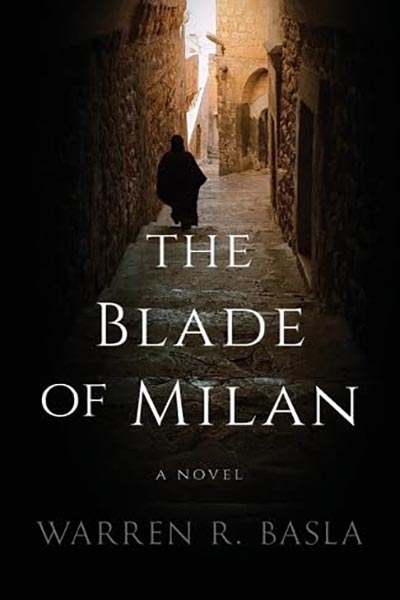

Set in late 13th‑century Italy, Warren R. Basla’s The Blade of Milan is a creative reimagining of Assassin’s Creed. Rebecca Guarna’s journey—from a young courtesan in a Milanese brothel to a master assassin—is set against the historical backdrop of political and economic rivalry between the rising Visconti and Della Torre families, which ruled Milan in the mid‑1200s.
The novel opens with Rebecca’s revenge killings of hypocritical patrons—clergy, administrators, and merchants who exploit women like her while hiding behind a situational morality that selectively serves their convenience. Her first-hand experience teaches her that abuse is not confined to the elite; even the downtrodden find ways to dominate those just below them. Before long, her killings attract the attention of the leader of the Sons of Saint George, a secretive brotherhood of assassins.
Want more historical fiction worth your reading time? Join my Reader list for occasional book reviews, research notes, and new chapters from the world behind Sic Parvis Magna. Join the Reader List
The story’s subtext is interesting. Rebecca is a smart, resourceful, and strong heroine who earns her independence on her own terms. She realizes she is a disposable pawn in someone else’s game.
“The world is a bigger place than the stews. It would be a shame to die here.”
– Rustichello da Pisa, the Fixer
In increasingly challenging assignments—one abusive target after another, one corrupt official after another—she begins to see the real depth of corruption beyond her personal experience in the brothels. This is the moment in her arc that I enjoyed the most.
Though an assassin, she keeps her own sense of honor and refuses to murder indiscriminately. She uses non-lethal techniques to achieve her ends. She turns infrastructure to her advantage. She dares to do certain things that her caste would never normally allow.
Not only does she figure out the game, but in becoming the sole Daughter of St. George, she makes the quintessential turn from victim to master—changing the game.
The storytelling occasionally slips with dialogue or references that echo more modern meanings than a 13th‑century setting might warrant. Where Rebecca is multi-dimensional, some of the key characters could have been shaded with more nuance, and the story relies on narration to advance the plot where more interior depth and scene-level immediacy would have made the experience richer. Though more historically-minded readers might pause, these details do not derail the story.
Basla’s The Blade of Milan delivers a gritty, historically themed reimagining of Assassin’s Creed that will appeal to readers who enjoy a rewarding redemptive arc set in late medieval Milan.
Read Next


Did You Like This?